SCOTUSLens
What did the Court actually decide?
Services
Brand Strategy, Visual Identity, Product & Interface Design, Front-End Development, AI Architecture
Result
A free, public platform that scores every Supreme Court case on public good and original intent, maps how the nine justices divided, and links every figure back to the opinion it came from.
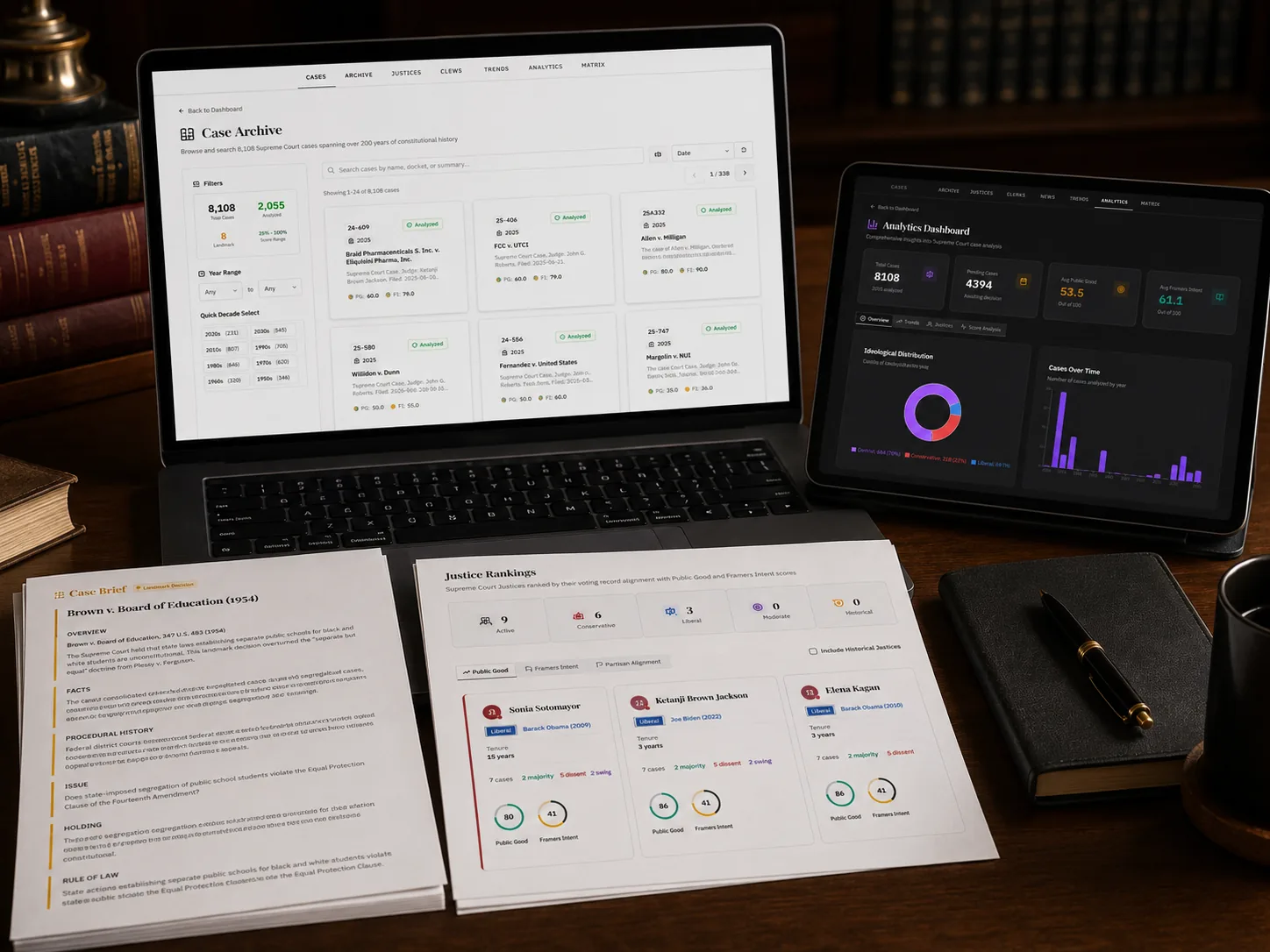
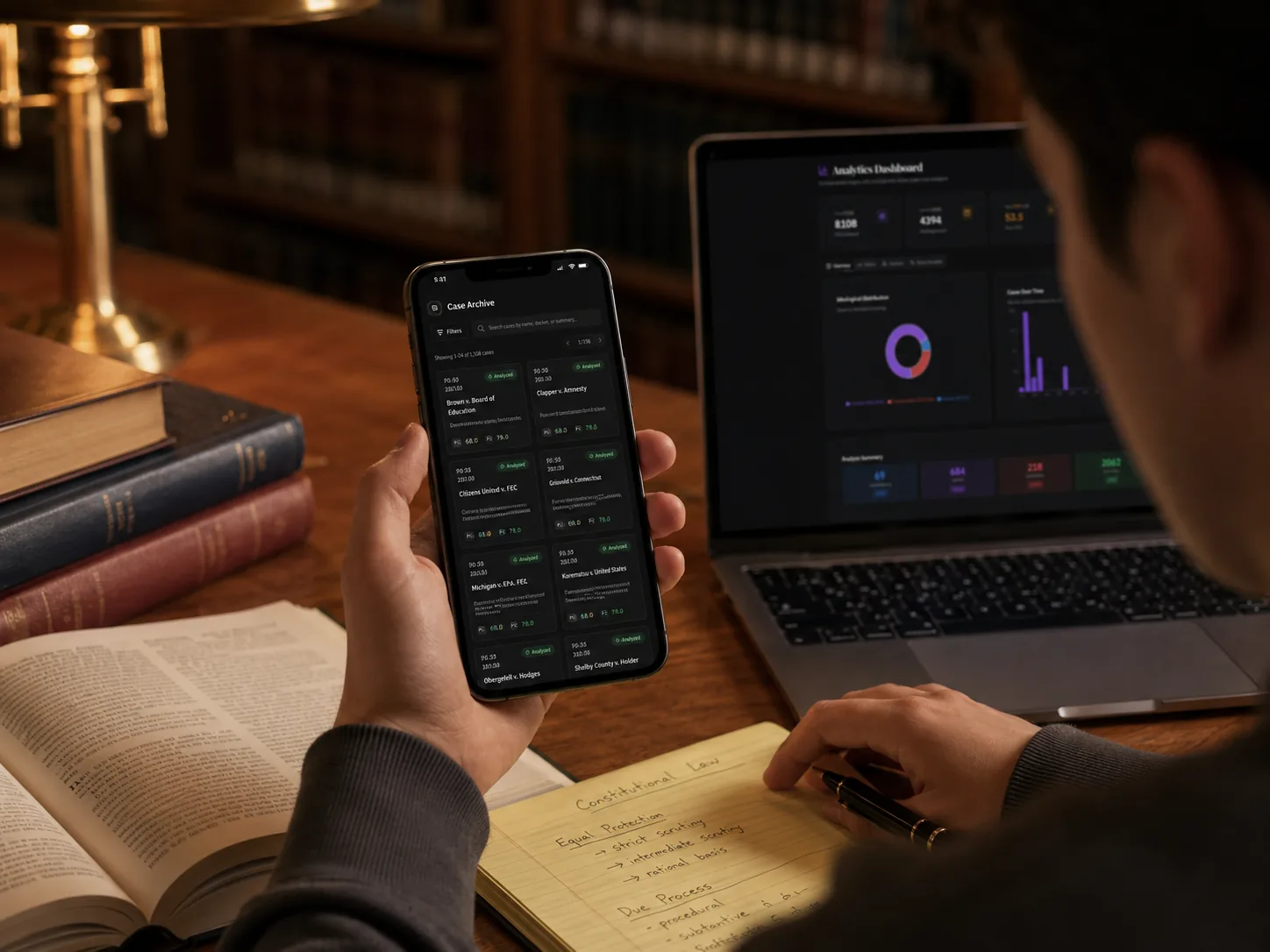
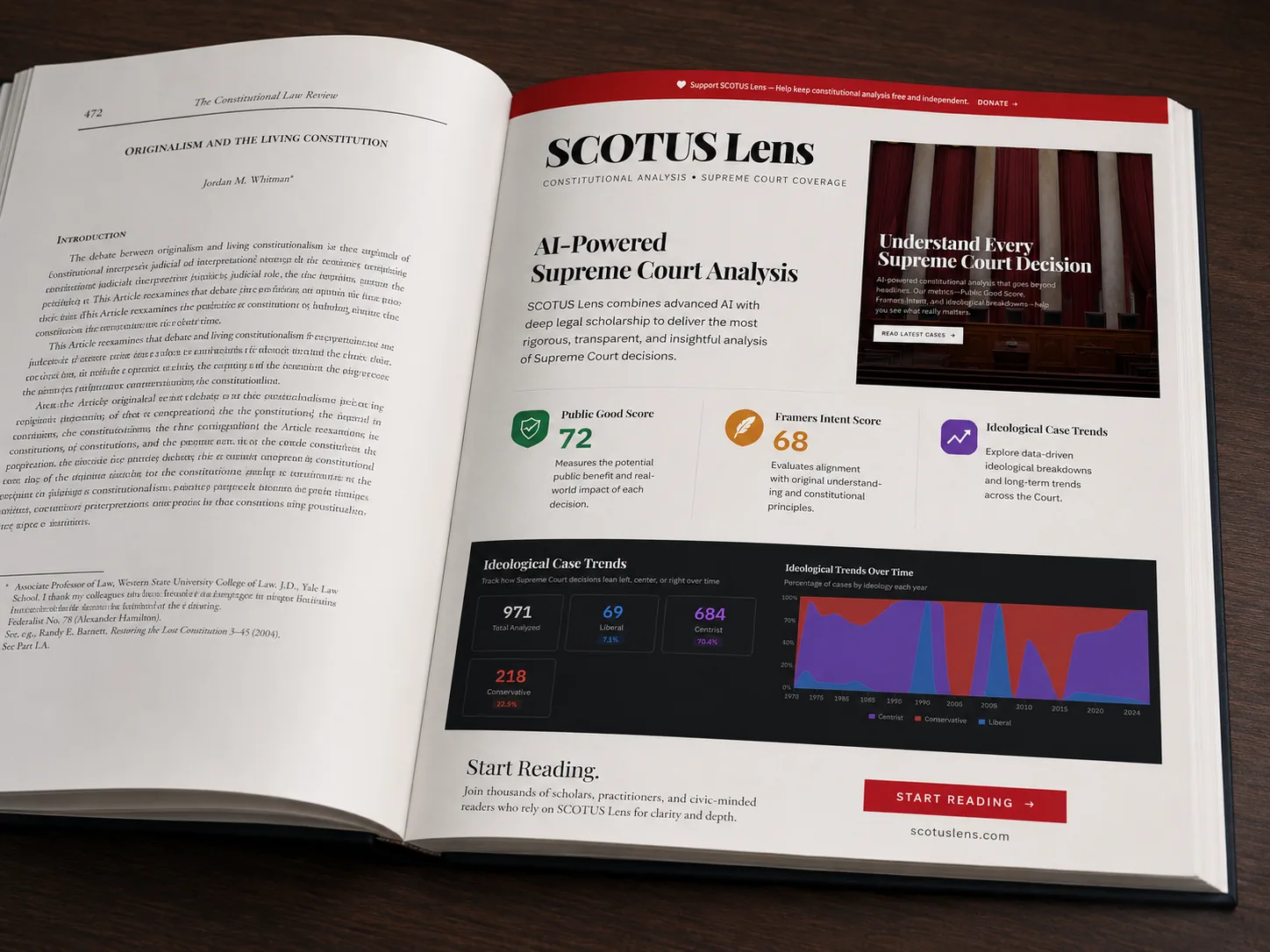
Every Supreme Court term changes how people actually live, but the reasoning sits inside opinions that run a hundred pages and assume you already speak law. SCOTUSLens closes that gap. It reads every case the Court has decided and scores each one two ways: a Public Good Score for what the ruling does to real rights and welfare, and a Framers Intent Score for how close it stays to the original Constitution. You see the vote, the majority, and the dissent at a glance, and you can understand a ruling in a minute instead of a weekend.
- Liberal 49%
- Conservative 32%
- Mixed 19%
A ruling that touches millions should not be legible only to the few hundred people trained to parse it. If the public record is open, the analysis can be open too, sourced, scored, and free of spin, so anyone can see not just who won, but whether the decision served the country and kept faith with the Constitution.
What makes it worth trusting is the method. Instead of leaning on one model with one bias, it runs each case through a multi-model AI consensus, and it anchors the Framers Intent Score in primary sources: the plain text, the historical record, the Federalist Papers, Locke and Madison. Not a pundit’s gut. We keep the two scores deliberately apart, because a ruling can serve the public and still drift from original intent, or honor the text and quietly narrow a right. The cases worth watching are the ones where those two needles disagree.
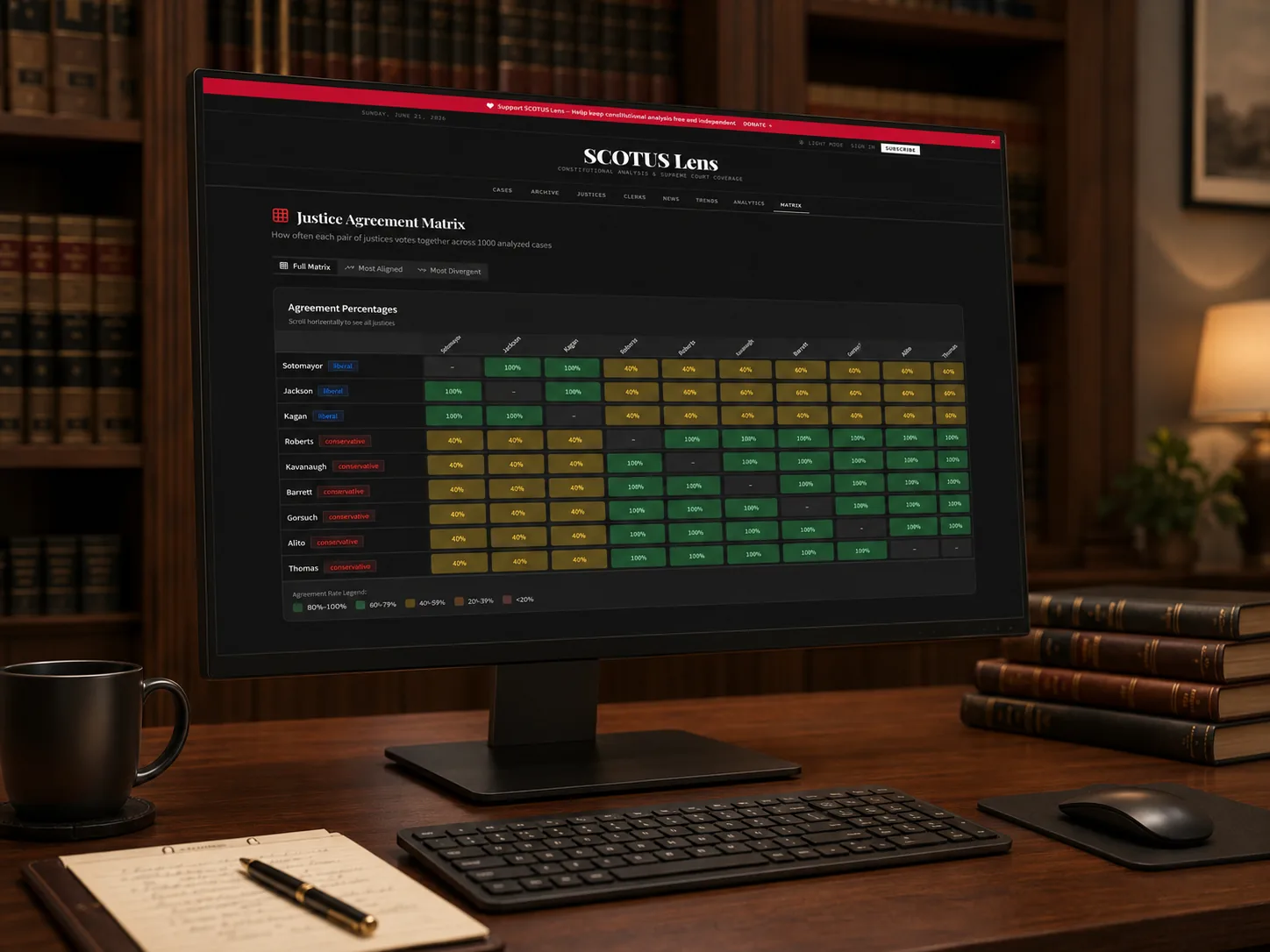
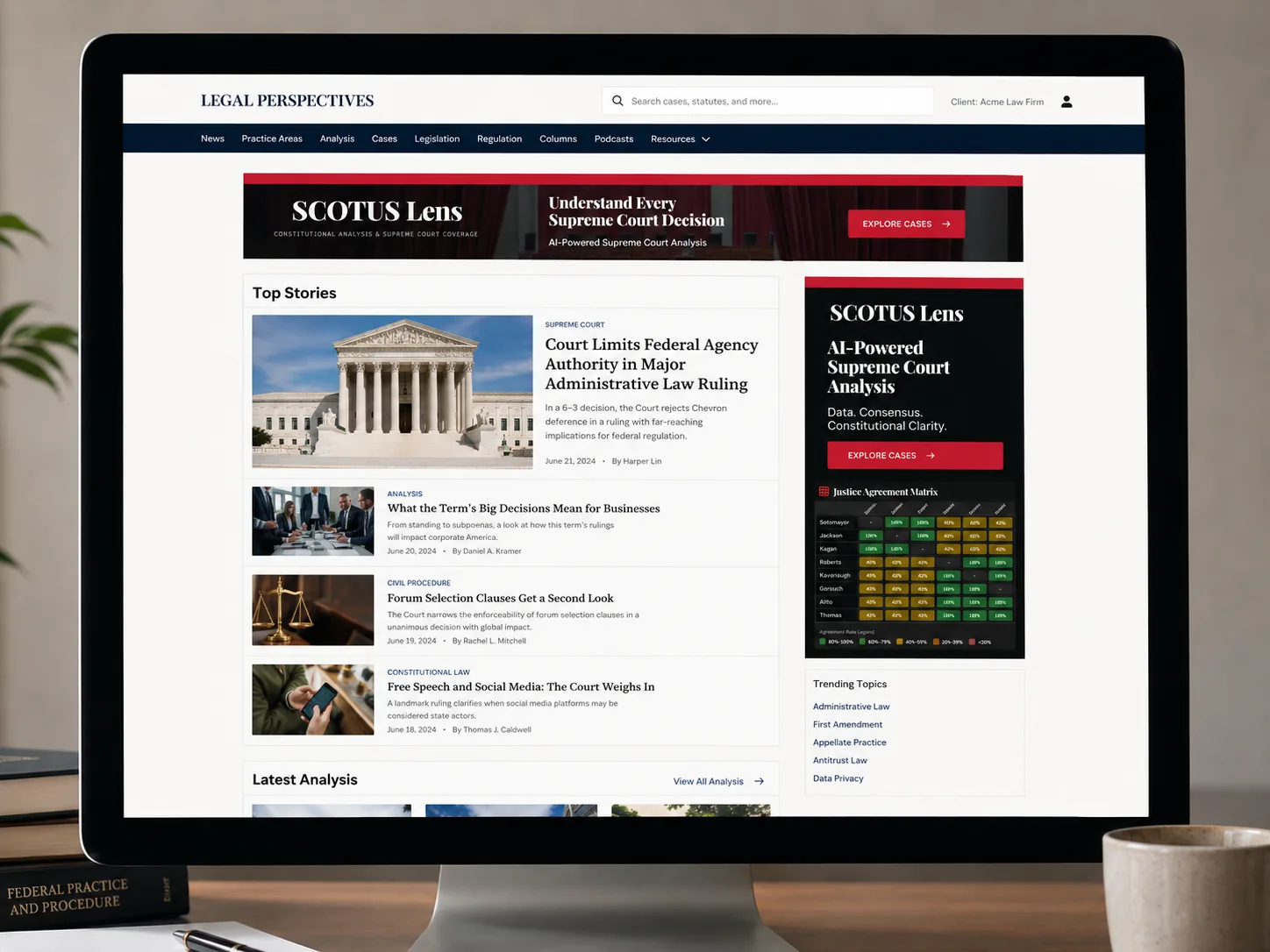
The rest of the interface exists to protect that trust. A Justice Agreement Matrix shows how the nine line up across a term, an analytics view tracks the Court’s drift over time, and every score links straight back to the opinion, the vote, and the date. No partisan framing, no paywall, no account. We designed, built, and trained the whole thing ourselves: the brand, the interface, and the model behind it.