FairwayLeo
How much room is left in orbit.
Services
Brand Strategy, Visual Identity, Product & Interface Design, Front-End Development
Result
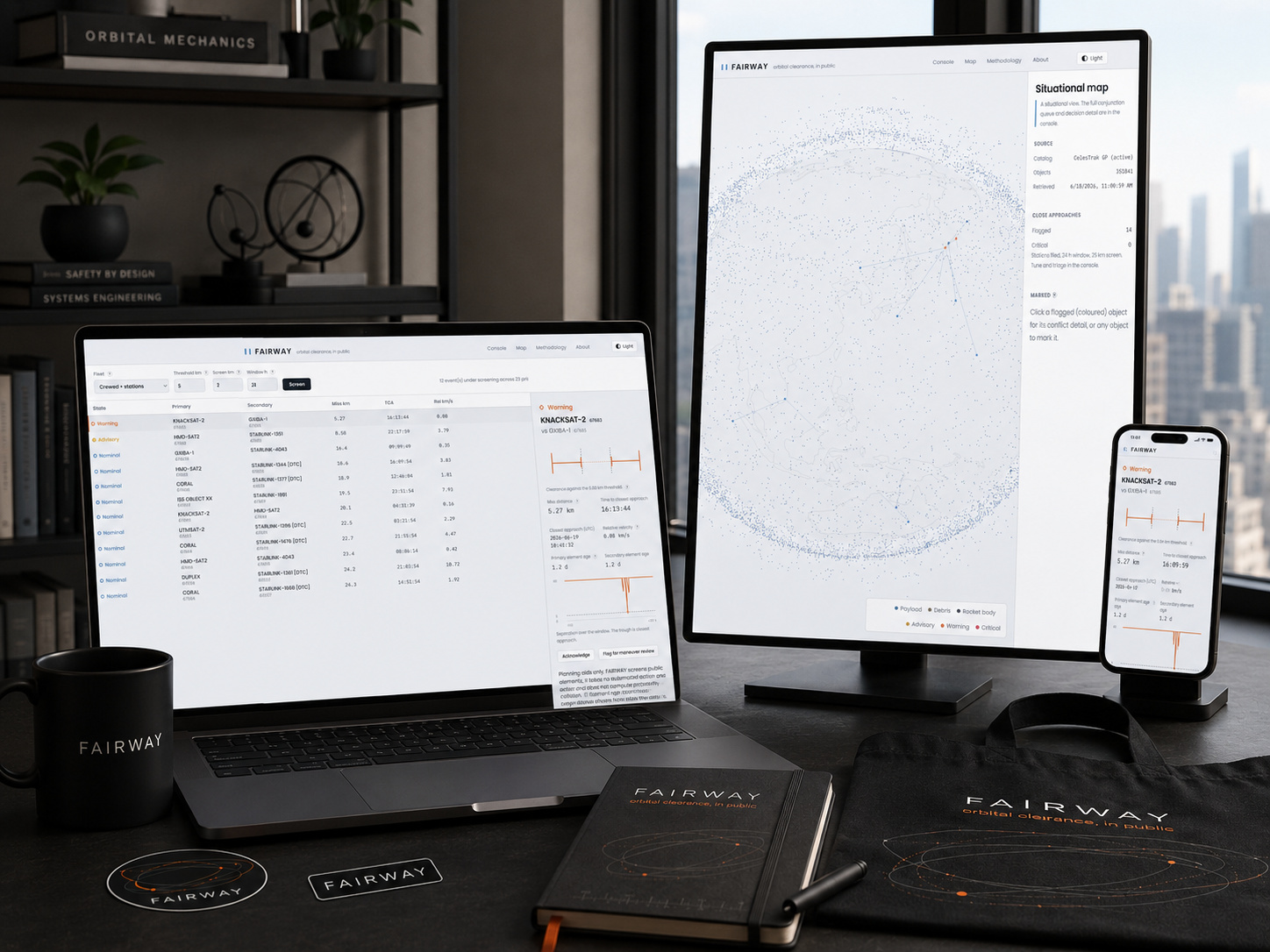
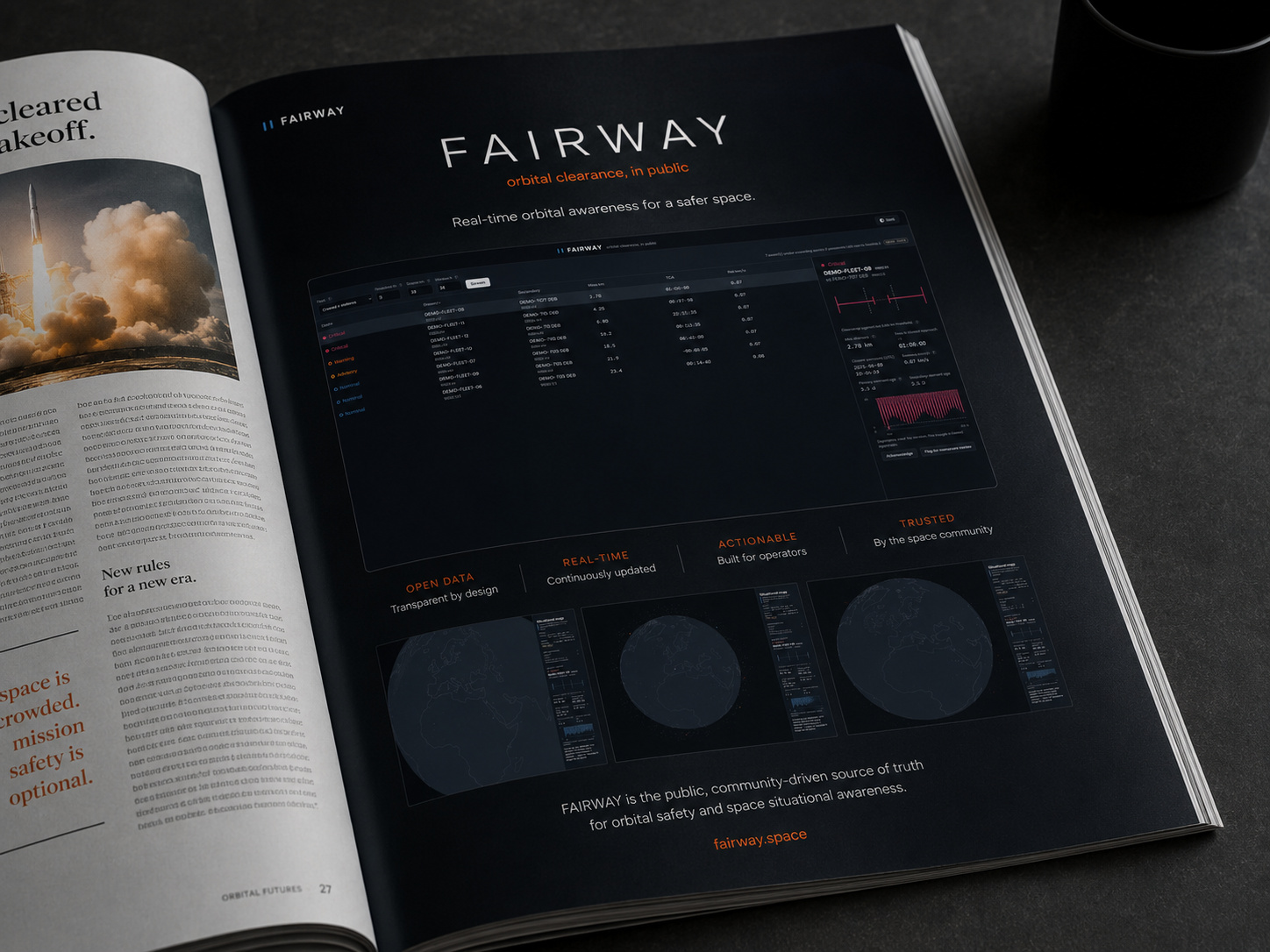
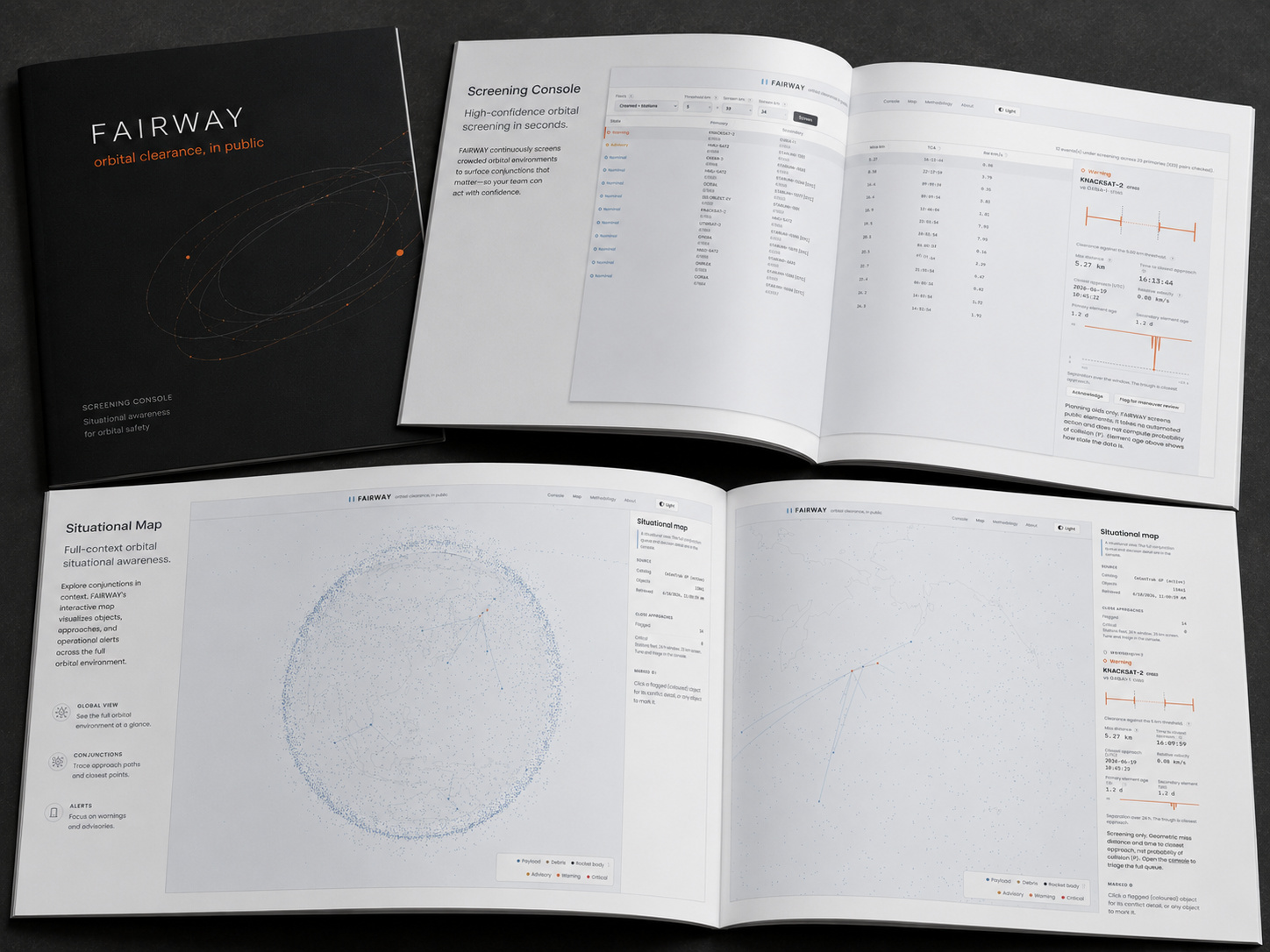
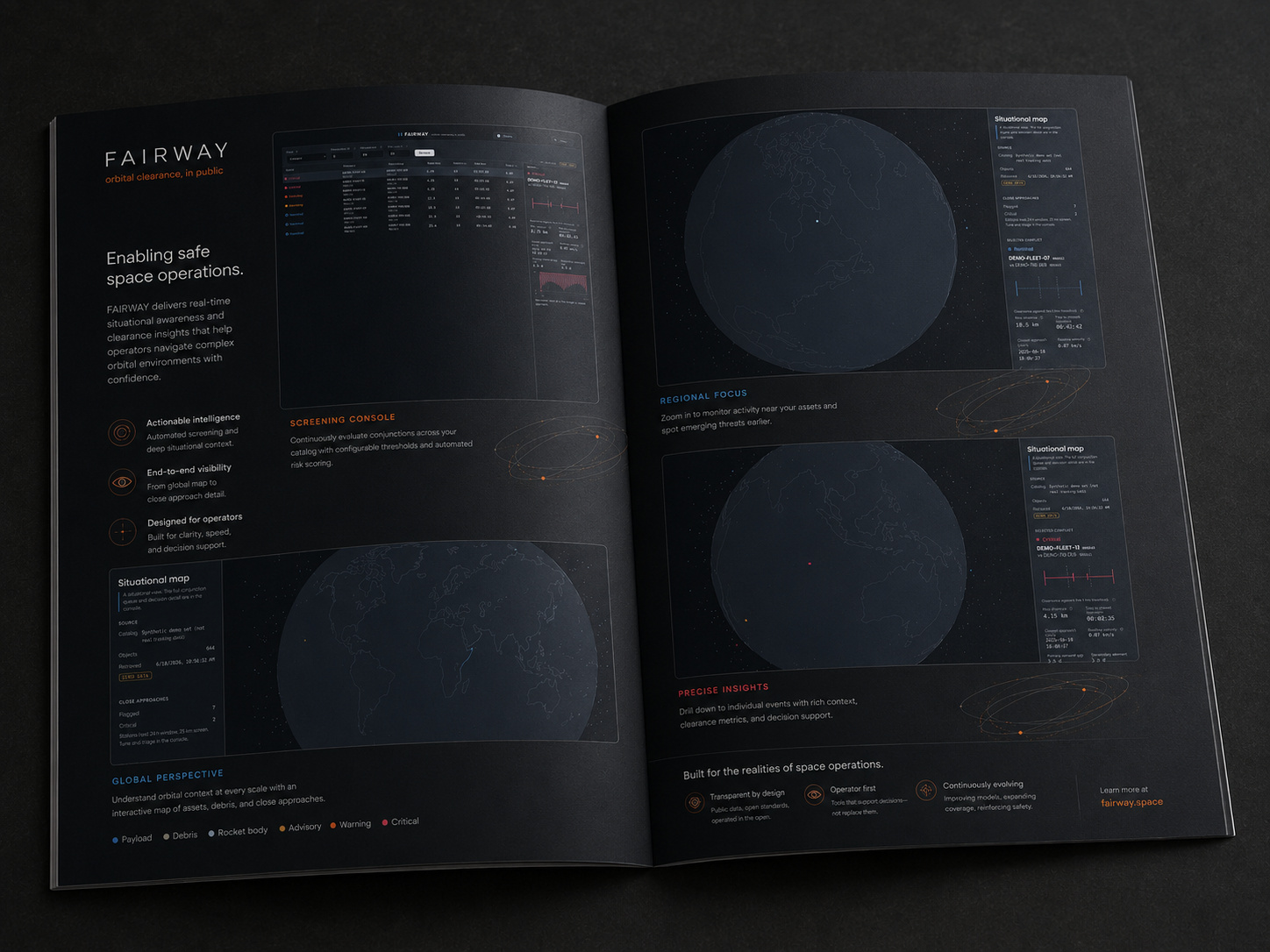
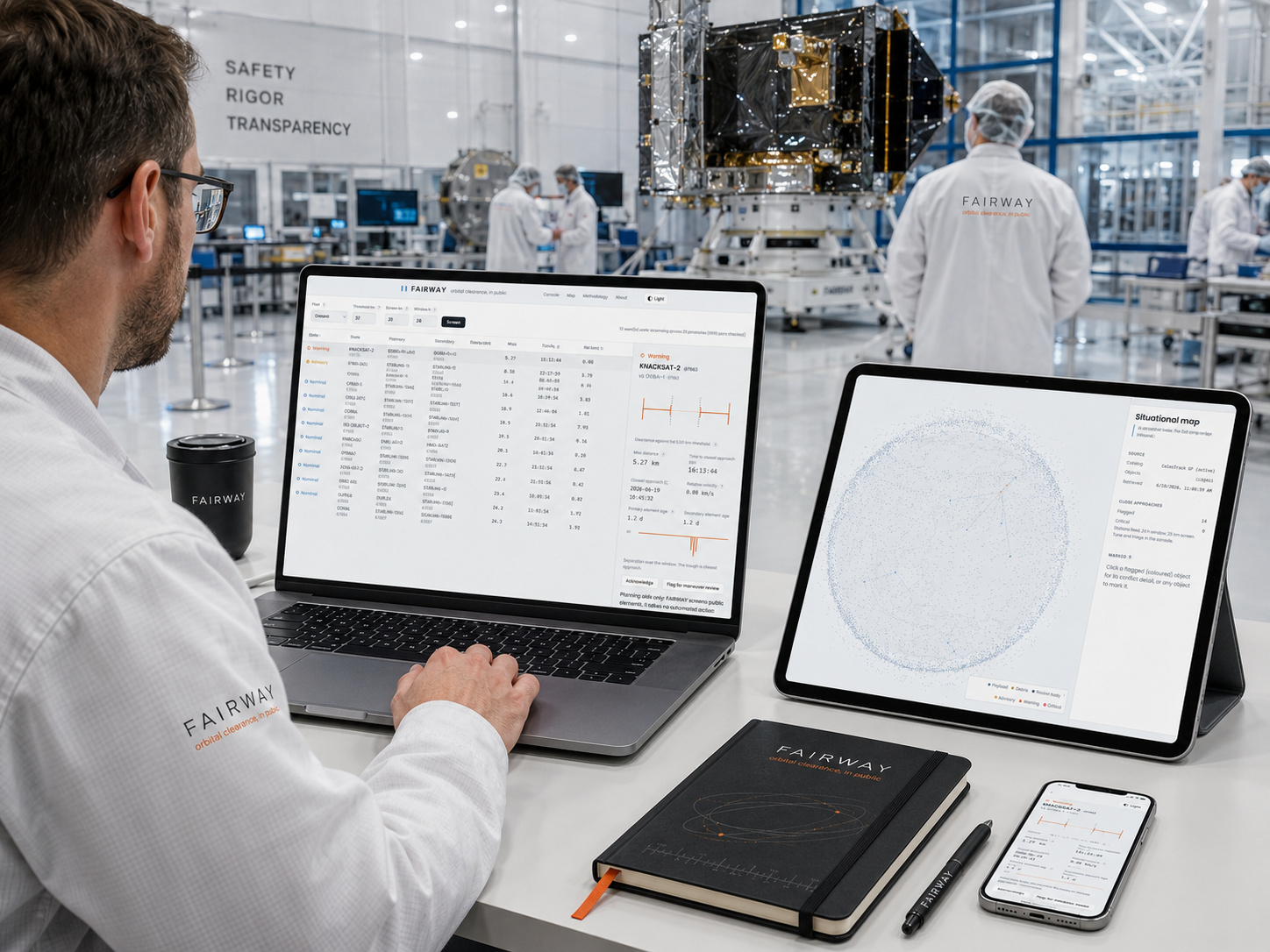
A live, public screening console that turns open orbital data into a calm hold-or-move decision, with its own scope honestly drawn on every risk surface.
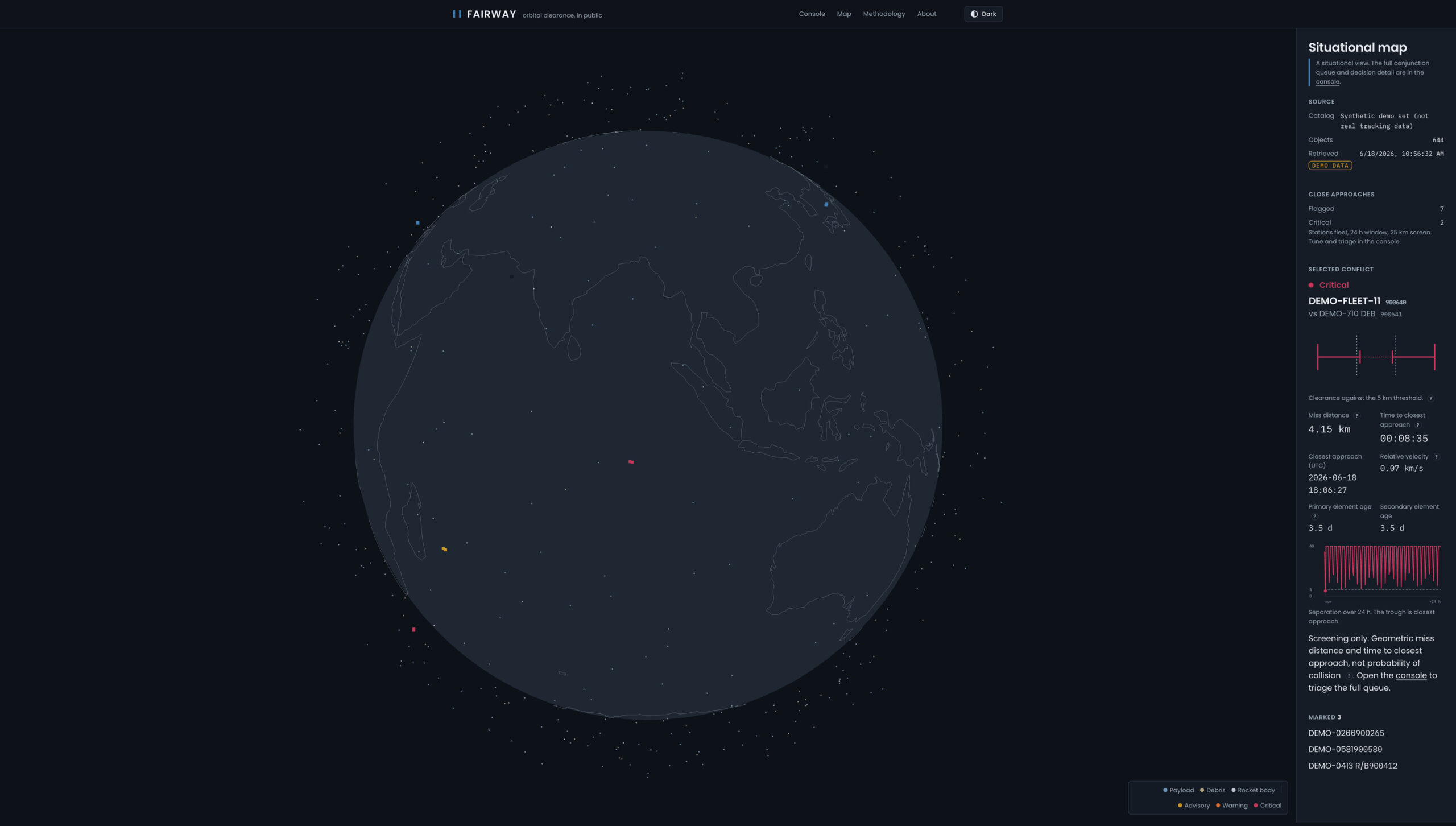
FairwayLeo is a self-initiated studio project: a conjunction-screening console for low Earth orbit. Collision avoidance has crossed a threshold, shifting from an occasional background task to a constant operational burden as surveillance networks track tens of thousands of objects larger than 10 centimeters. Operators now face the same question over and over, often under time pressure: hold, or move. FairwayLeo reads public orbital data, screens for close approaches, and measures the clearance that remains, turning a firehose of numbers into a calm triage surface.

The premise is simple: orbit is a shared commons, not a cockpit. If clearance can be measured from public data, it can be shown honestly and in the open, with every figure carrying its source and the moment it was true. FairwayLeo is built to show its work, and to never claim more certainty than the open data allows.
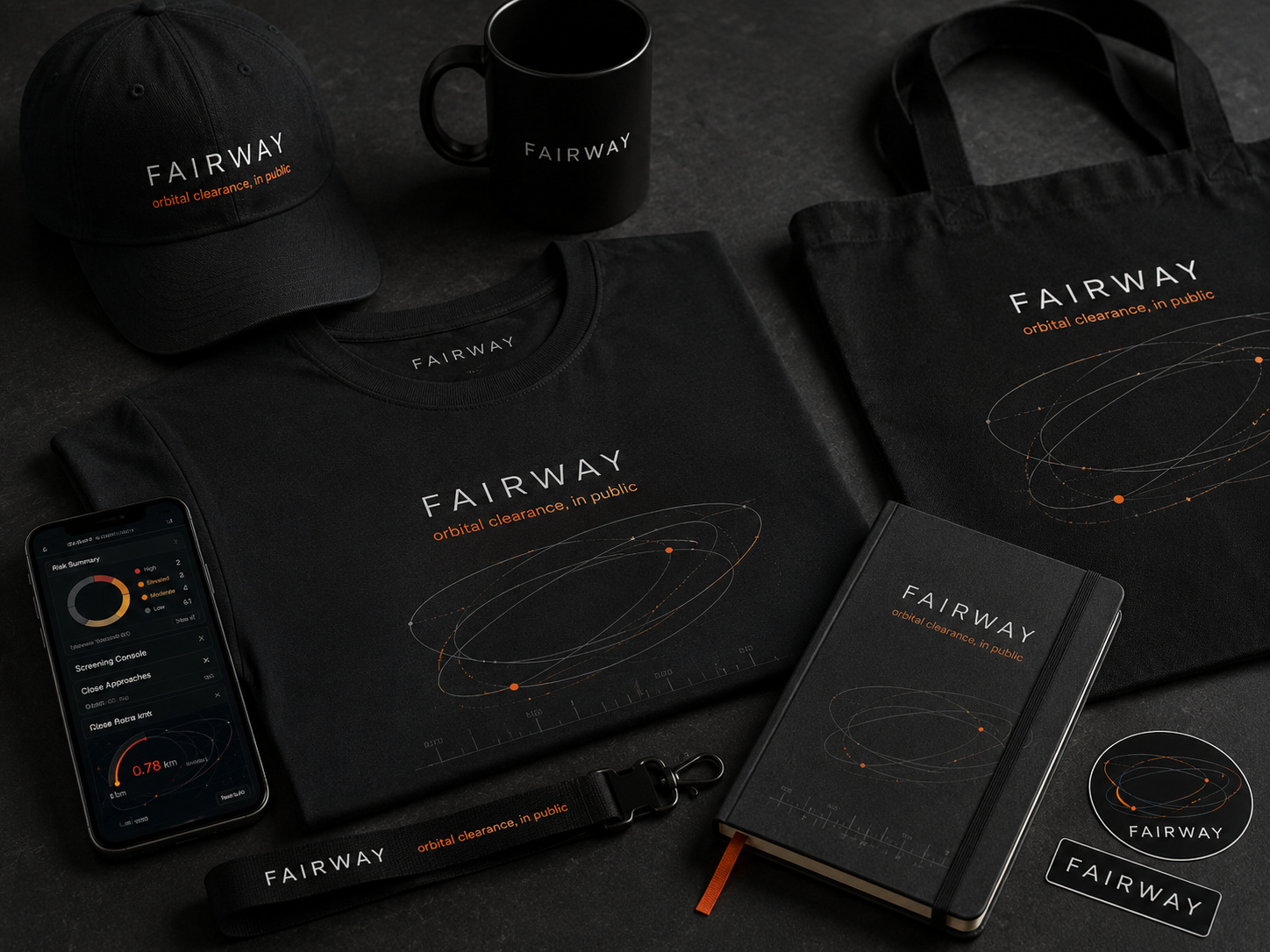
The whole project is built around one idea: orbit as a shared commons, not a cockpit. Instead of the sci-fi heads-up display that defines the sector, the reference points are a public weather service and a precision field instrument. Risk is a four-step, colorblind-safe language, never carried by color alone. The signature element is the Clearance Caliper, two jaws closing on a predicted miss distance against a fixed threshold line with a countdown to closest approach. It renders the stewardship thesis literally, showing how much room is left.
Honesty is structural rather than a disclaimer. FairwayLeo reports geometric miss distance and time to closest approach, not a probability of collision, because the covariance data that would require is not public, and that scope boundary stays visible on every risk surface. Every figure carries its source, fetch time, and the epoch of the data it came from. Built on the modern OMM and GP-JSON formats, screened in the browser, and accessible to WCAG 2.1 AA, it is exactly the kind of work the Workshop exists for: technology we wanted to build because the problem was real and the craft was worth getting right.